
Title: The Power of Love: Lessons from Jeffrey Gear
Introduction:
Love is a powerful force that shapes our lives and relationships. In the story of Jeffrey Gear and his family, we find inspiration and lessons on the profound impact of love. Let’s delve into the key lessons we can learn from Jeffrey’s love for his Dad, Mum, and Brother.
Lesson 1: Unconditional Love
Jeffrey’s love for his family knows no bounds. He loves his Dad, Mum, and Brother unconditionally, regardless of any shortcomings or challenges they may face. This teaches us the importance of accepting and embracing our loved ones for who they are, flaws and all.
Lesson 2: Support and Encouragement
Jeffrey’s love isn’t just passive; it’s active and supportive. He stands by his family through thick and thin, offering encouragement and support in times of need. This reminds us of the power of being there for our loved ones, lending a helping hand and a listening ear whenever they require it.
Lesson 3: Cherishing Moments
In Jeffrey’s love for his family, we see a deep appreciation for the moments they share together. Whether it’s a simple dinner at home or a day out exploring, Jeffrey treasures these moments with his Dad, Mum, and Brother. This teaches us to cherish the time we have with our loved ones, making memories that will last a lifetime.
Lesson 4: Forgiveness and Understanding
No family is perfect, and Jeffrey’s is no exception. Yet, his love allows him to forgive and understand his family members’ mistakes and shortcomings. This teaches us the importance of forgiveness and empathy in nurturing strong and healthy relationships.
Conclusion:
The story of Jeffrey Gear and his family exemplifies the transformative power of love. Through unconditional love, support, cherishing moments, and forgiveness, Jeffrey teaches us invaluable lessons on building and maintaining meaningful relationships with our own families. Let us embrace these lessons as we strive to cultivate love and connection in our lives.
Chef’s Future After Covid-19
After the COVID-19 pandemic, the landscape for chefs and the hospitality industry has undergone significant changes, leading to the evolution of their careers, businesses, and the way they operate. The pandemic forced chefs and restaurant owners to adapt quickly to survive, leading to innovations and new trends that are likely to shape the future of the industry.
1. Career Evolution for Chefs
– During the pandemic, many chefs had to pivot to new ways of working, such as offering meal kits, virtual cooking classes, and takeout services. This experience has expanded their skill set and flexibility, allowing them to explore new opportunities beyond traditional restaurant settings.
– The demand for personal chefs and private dining experiences has increased as people seek more intimate and exclusive culinary experiences in the post-pandemic world. Chefs who can cater to these needs may find new avenues for their careers.
2. Business Adaptations:
– Restaurants have had to embrace technology more than ever before, with online ordering systems, contactless payments, and digital menus becoming the norm. Chefs who understand and leverage technology in their businesses are likely to stay competitive in the evolving market.
– Many chefs have turned to social media and online platforms to market their services, engage with customers, and build their personal brands. Building a strong online presence can help chefs reach a wider audience and attract new opportunities.
3. New Ways of Hospitality:
– The concept of hospitality has shifted to prioritise safety, cleanliness, and customer comfort in the wake of the pandemic. Chefs and restaurant owners are implementing stringent health and safety protocols to reassure diners and create a welcoming environment.
– Outdoor dining, pop-up restaurants, and food trucks have become popular alternatives to traditional dining experiences, offering chefs more flexibility and opportunities to showcase their creativity in different settings.
– Sustainability and ethical sourcing have gained prominence in the hospitality industry, with consumers increasingly interested in supporting businesses that prioritizeenvironmental responsibility and social impact. Chefs who embrace these values can attract a growing segment of conscious consumers.
4. Future Outlook:
– The hospitality industry is resilient and adaptive, and chefs who can innovate and stay ahead of trends are likely to thrive in the post-pandemic world. Collaboration, creativity, and a willingness to embrace change will be key qualities for success in the evolving landscape.
– Virtual dining experiences, blockchain-powered supply chains, and AI-driven personalised menus are some of the trends that may shape the future of the industry. Chefs who are open to experimentation and technology-driven solutions can stay at the forefront of these developments.
– Community support and local partnerships will play a crucial role in the recovery and growth of the hospitality sector. Chefs who engage with their communities, support local producers, and contribute to sustainable practices are likely to build stronger connections and long-term success.
In conclusion, the COVID-19 pandemic has brought about significant challenges for chefs and the hospitality industry, but it has also spurred innovation, adaptation, and new opportunities for growth. By embracing change, leveraging technology, and prioritising customer needs, chefs can navigate the post-pandemic landscape successfully and contribute to a more resilient and dynamic culinary scene.
Title: The Challenges Faced by Young Chefs Today
In the dynamic world of culinary arts, young chefs are entering the industry with a passion for innovation and a desire to make their mark. However, many are facing challenges that can hinder their progress and lead to failures within the first few years of their careers. These notes explore the reasons behind why some young chefs believe they have the knowledge of older, more experienced chefs, and delves into the factors that contribute to their struggles in the early stages of their culinary journey.
One of the reasons why young chefs may believe they possess the same level of knowledge as older chefs is the accessibility of information in the digital age. With the proliferation of cooking shows, online tutorials, and social media platforms dedicated to food, aspiring chefs have a wealth of resources at their fingertips. These notes access to information can create a false sense of expertise, leading some young chefs to overestimate their skills and knowledge.
Moreover, the desire to stand out in a competitive industry may drive young chefs to experiment with unconventional techniques and ingredients without fully understanding the fundamentals of cooking. While innovation is essential in the culinary world, a solid foundation of traditional culinary techniques is crucial for success. Without this knowledge, young chefs may struggle to execute their creative ideas effectively, leading to disappointments and setbacks.
Despite their passion and enthusiasm, many young chefs encounter challenges that contribute to their struggles in the early years of their careers. Inexperienced in managing high-pressure kitchen environments, some may find it difficult to cope with the demands of a professional kitchen. The fast-paced nature of the culinary industry, coupled with long hours and intense competition, can be overwhelming for those who are not prepared for the rigours of the job.
Additionally, young chefs may lack the mentorship and guidance that older, more experienced chefs can provide. Without proper mentorship, they may struggle to develop their skills, refine their techniques, and navigate the complexities of the culinary world. The absence of a supportive network can hinder their professional growth and lead to burnout or disillusionment.
Furthermore, the transition from culinary school to a professional kitchen can be challenging for young chefs. While culinary programs provide valuable theoretical knowledge and hands-on experience, they may not fully prepare students for the realities of working in a professional kitchen. The high expectations of employers, the need to work efficiently under pressure, and the demands of meeting customer preferences can be daunting for those who are new to the industry.
In conclusion, young chefs of today face a myriad of challenges as they embark on their culinary careers. While their passion and creativity are commendable, they must also recognise the importance of humility, continuous learning, and respect for the knowledge and experience of older chefs. By seeking mentorship, honing their skills, and embracing the fundamentals of traditional culinary techniques, young chefs can overcome the obstacles they face and thrive in the competitive world of gastronomy. With dedication, perseverance, and a willingness to learn from setbacks, they can realise their full potential and establish themselves as successful chefs in the years to come.
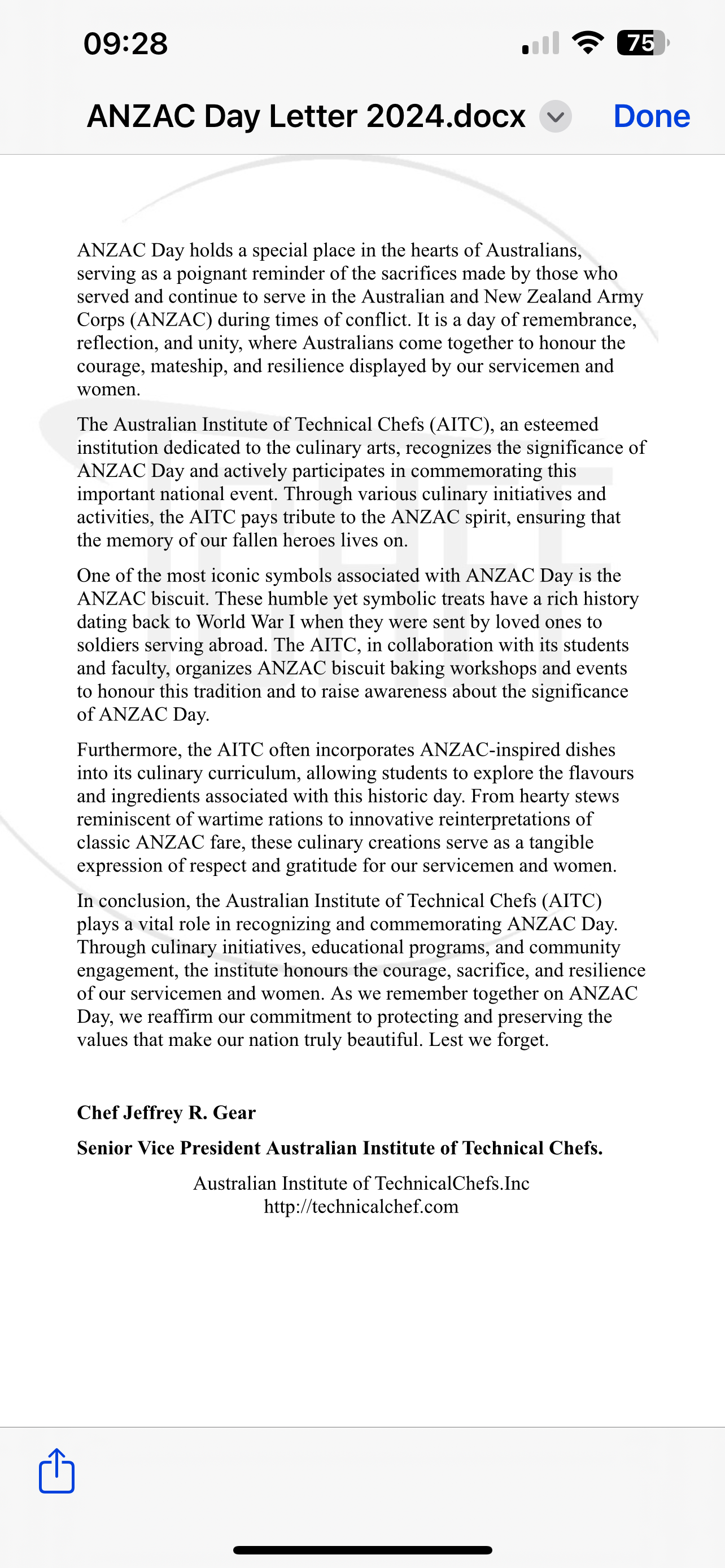
Australia Day “Australian Institute of Technical Chefs (TChef)
Dear Colleagues, Friends and Mentors
On this Australia Day, we would like to extend our warmest greetings to all of you. It is a day to celebrate our great nation and the diverse culture that makes Australia so unique.
At the Australian Institute of Technical Chefs (AITC), we are proud to be a part of the culinary industry in this beautiful country. We believe that being an Australian chef goes beyond just cooking delicious food; it is about embracing the values and traditions that define our nation.
As members of AITC, we have the opportunity to come together and share our knowledge, experiences, and support with one another. We believe in the power of collaboration and the strength that comes from a united community.
Joining TChef allows you to be a part of a network of passionate individuals who are dedicated to elevating the culinary scene in Australia. Whether you are a seasoned chef or just starting your culinary journey, we welcome you with open arms.
Together, we can learn from each other, inspire one another, and create a culinary landscape that showcases the best of Australian cuisine. Let us continue to grow, innovate, and push the boundaries of what it means to be an Australian chef.
On this Australia Day, let us reflect on the rich culinary heritage of our nation and the opportunities that lie ahead. We are grateful for each and every one of you and the contributions you make to our industry.
Happy Australia Day!
Warm Culinary regards,
Jeffrey R. Gear
Senior Vice President Australian Institute of Technical Chefs (Tchef)
Happy New Year AITC and Colleagues
Dear Chef colleagues and members of the Australian Institute of Technical Chefs,
As we bid farewell to the challenges and triumphs of the past year, I would like to take a moment to extend my warmest wishes for a joyous and prosperous New Year. May this coming year bring you success, happiness, and fulfillment in both your personal and professional endeavours.
I would also like to take this opportunity to invite all of you to consider becoming a member of the Australian Institute of Technical Chefs (AITC) in 2024. By joining our esteemed organization, you will gain access to a wealth of resources, networking opportunities, and professional development programs that will further enhance your culinary skills and knowledge.
As the Senior Vice President of AITC, I can personally attest to the immense value that being a member brings. Our institute is dedicated to promoting excellence in the culinary arts and providing a platform for chefs to connect, learn, and grow. By becoming a member, you will be joining a community of like-minded professionals who are passionate about elevating the culinary industry in Australia.
Once again, I wish you all a very happy and safe New Year. May it be filled with delicious creations, memorable experiences, and continued growth in your culinary journey.
Warm regards,
Chef Jeffrey Gear
Senior Vice President
Australian Institute of Technical Chefs
MY STORY 18
The role of chefs is constantly evolving, and the chefs of the future will likely face significant changes in their profession. Here are some key changes that may occur:
1. Emphasis on sustainability: With increasing concerns about the environment and the need for sustainable food practices, chefs of the future will likely be expected to prioritize sustainable sourcing, reduce food waste, and promote environmentally friendly cooking techniques.
2. Technological integration: Technology is already playing a significant role in the culinary world, and this trend is expected to continue. Chefs of the future may need to be proficient in using advanced kitchen equipment, such as sous vide machines, molecular gastronomy tools, and3D food printers. Additionally, they may need to adapt to new cooking methods and techniques facilitated by technology.
3. Health-conscious cooking: As people become more health-conscious, chefs will need to cater to dietary restrictions and preferences. This may involve creating menus that accommodate various dietary needs, such as gluten-free, vegan, or low-sodium options. Chefs may also need to focus on creating nutritious and balanced meals without compromising on taste.
4. Fusion of cuisines: With globalization and increased cultural exchange, the demand for fusion cuisine is likely to grow. Chefs of the future may need to be well-versed in different culinary traditions and be able to combine flavors, techniques, and ingredients from various cultures to create innovative and unique dishes.
5. Personalization and customization: As consumers seek more personalized dining experiences, chefs may need to offer customizable menus and dishes. This could involve allowing customers to choose their preferred ingredients, cooking methods, or portion sizes. Chefs may also need to adapt to individual dietary needs or allergies, creating tailored meals for each customer.
6. Focus on food education: With the rise of food-related health issues and the need for a better understanding of nutrition, chefs may take on a more educational role. They may be expected to educate consumers about the nutritional value of different ingredients, teach cooking techniques, and promote healthy eating habits.
7. Entrepreneurship and multi-skilling: Chefs of the future may need to possess strong business acumen and entrepreneurial skills. They may be required to manage their own restaurants, food trucks, or catering businesses, and handle various aspects of the operation, including marketing, finance, and customer service. Additionally, chefs may need to diversify their skills and be proficient in areas such as food photography, social media management, and recipe development to stay competitive in the industry.
Overall, the chefs of the future will need to be adaptable, creative, and open to embracing new technologies and culinary trends. They will play a crucial role in shaping the future of food, promoting sustainability, and meeting the evolving demands of consumers.
This Is MY STORY
Best of the Best competition is closing and Queensland you haven’t submitted a young up and budding “Best of the Best” Apprentice Cook, Young Chef
You all have until the end of this month to apply.
Application form is attached…………..
I have contacted QLD TAFE … why haven’t you submitted your BEST student??
Executive Chefs and Sous Chefs come on submit your apprentice.. QLD need a place at the finishing line..
Best of the Best 2022.
Do you have an apprentice or student who is in the same class as the 2021 winners? If so, demonstrate you are the “Best of the Best” chef or teacher, nurturing a future culinary Industry leader.
In 2021 Staff from
The Bishop Tyrrell Anglican College from New South Wales was endorsed by prominent chefs, as the leading provider of Certificate II in cookery.
Tasmania (Drysdale TAFE) was identified as the Best Institute delivering Certificate III studies and Le Culinaire Hospitality Institute in New South Wales proved to be the foremost mentor of Certificate IV in Commercial Cookery.
Nominations from Northern Territory, Queensland scored exceptionally well, achieving scores of 85% plus. However, participants from South Australia, ACT and Western Australia, unfortunately, did not achieve in the semifinals. If you believe you and your work deserve recognition, all you need to do is send in your nomination with the requested evidence.
2022 Competitions – Australian Institute of TechnicalChefs Inc.
Additionally, a new opportunity encourages chefs and teachers to apply for the $12000 Humpty Doo Barramundi Grant to fund a ”once in a lifetime professional Development project”.
2022 PD Scholarship – Australian Institute of TechnicalChefs Inc.
A big thank you to our partners @humptydoobarramundi @universitymeat @dilmahaustralia @thesmokedegg #AITC #bestofthebest #TChef #chefsodAustralia #culinarycompetition #humptydoobarramundi #universitymeat #dilmahaustralia #thesmokedegg #professionalchef #VET Sent from my iPhone
PDF download complete and return
APPLICATION FORM -BEST OF THE BEST FUTURE CHEF AWARD 2022
Nominations are welcomed from representatives from government or private providers delivering recognised commercial cookery level of studies or from commercial hospitality business, hotel, restaurant, or any catering operation that employs trainees.
Select/ Tick Award Category:
Certificate II in Kitchen Operations
Certificate III in Commercial Cookery
Certificate IV in Commercial Cookery
Nominator Given Name: * Given name of: teacher/instructor/supervisor/chef/manager who nominates the candidate.
Nominator Family Name: * Family name of teacher/instructor/supervisor/chef/manager who nominates the candidate.
Nominator Title * Identify your current workplace title. E.G., Executive Chef – Teacher- Chef Instructor – Food and Beverage Manager Etc.
Nominator Workplace: * Identify your current workplace. E.G., Name of school – institute – company – restaurant – hotel etc.
City: *The city in which the nominator resides
State: *
Nominator Workplace Phone: * Contact Phone: Please include area code. (NO SPACES)
Nominator Mobile Phone: *(NO SPACES)
Nominator Contact Email: * Please Print
Candidate Given Name: * Given name of: Candidate (As it would appear on a certificate)
Candidate Family Name * (Family name of: Candidate as it would appear on a certificate)
Candidate Workplace: * Identify where the candidate is employed (If a fulltime student put NA.)
Candidates School -Institute -Provider: * The School – Institute or Provider where the candidate does or (did) attend.
City: *The city in which the candidate resides
State: *
Candidates Workplace Phone: * Contact Phone: Please include area code (If a fulltime student put nominator phone (NO SPACES).
Candidates Mobile Phone: * (NO SPACES)
SUPPORTING STATEMENT – Recommendation and evidence of / school results/ attitude/ demonstrated leadership qualities or why you nominate this candidate. Please summarize to a MAXIMUM 300 Words. (This statement may be used to shortlist candidates).
Terms and Conditions: By submitting this nomination the nominator and candidate agree:
- Nominations are only accepted by using this online form
- The (candidate and proposer) have read and understood the full profile of this competition
- The nominator agrees to be a mentor and referee to their nomination in the event of clear-cut finalists.
- The (candidate and proposer) consent to personal information being provided to the Australian Institute
- of TechnicalChefs for the purposes of organising a candidate’s participation in the “Best of the Best Future Chef Competition Award”
- The candidate and proposer and agree the Institute of Technical Chefs may contact the proposer,
- school/employer for the purpose of establishing the fitness of the candidate to be selected as a finalist.
We (The candidate and nominator) have read and understand the full Profile, Terms & Conditions to enter this award competition. By submitting this nomination, we consent to personal information being provided to the Australian Institute of TechnicalChefs for the purposes of organising a candidate’s participation in the “Best of the Best Future Chef Award”
PLEASE NOTE YOU MUST RECEIVE A CONFIRMATION MESSAGE TO ENSURE THIS NOMINATION IS REGISTERED, CHECK TO ENSURE YOU HAVE COMPLETED ALL DETAILS CORRECTLY AND SEND AGAIN. ERRORS ARE SEEN IN RED.
Submitted By
Dated
 Chef Jeffrey Gear